Shelcal 500
  Pro Kids Gummies
 Shelcal Total
Why Most Adults Ignore Their Calcium Needs: Until It’s Too Late
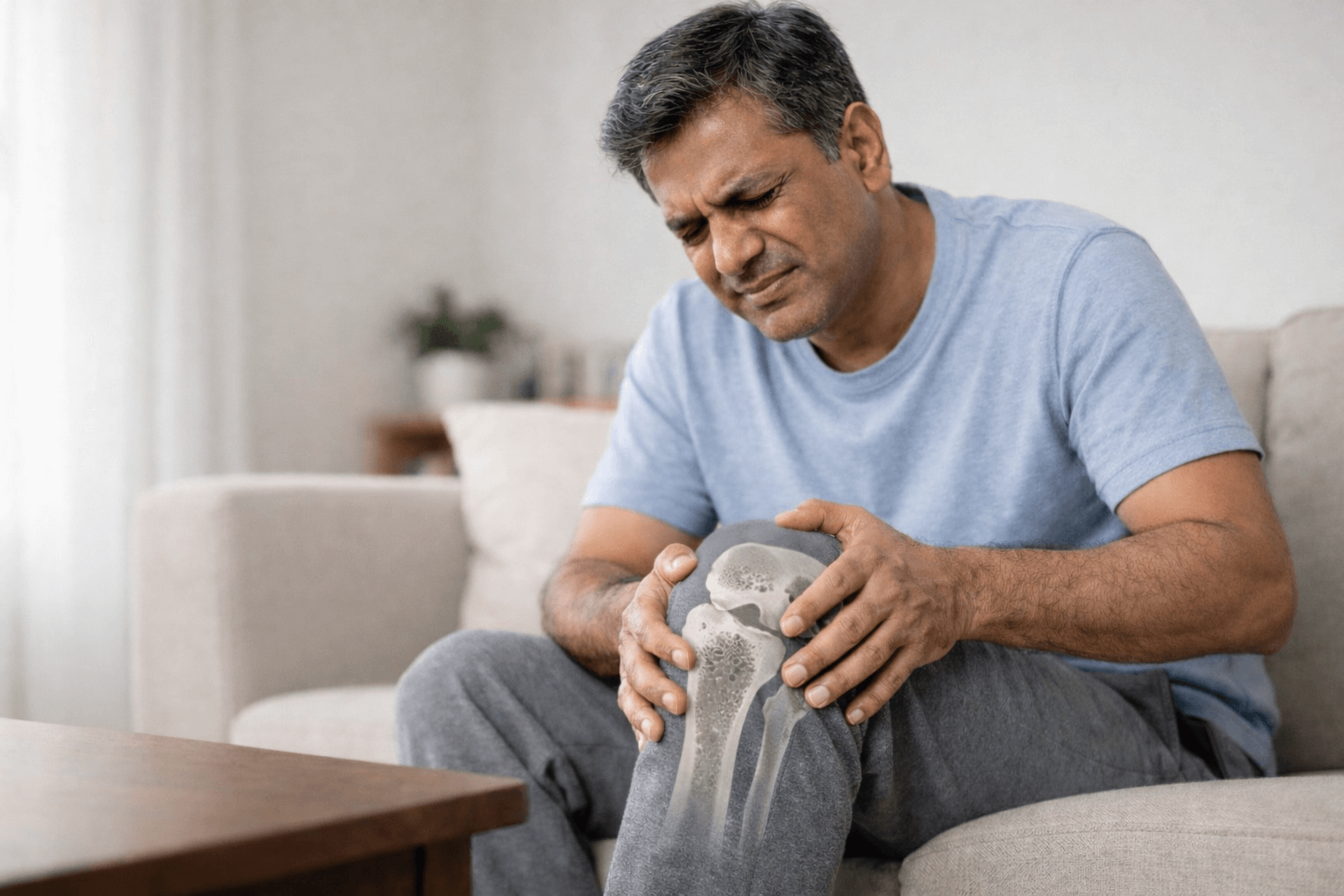
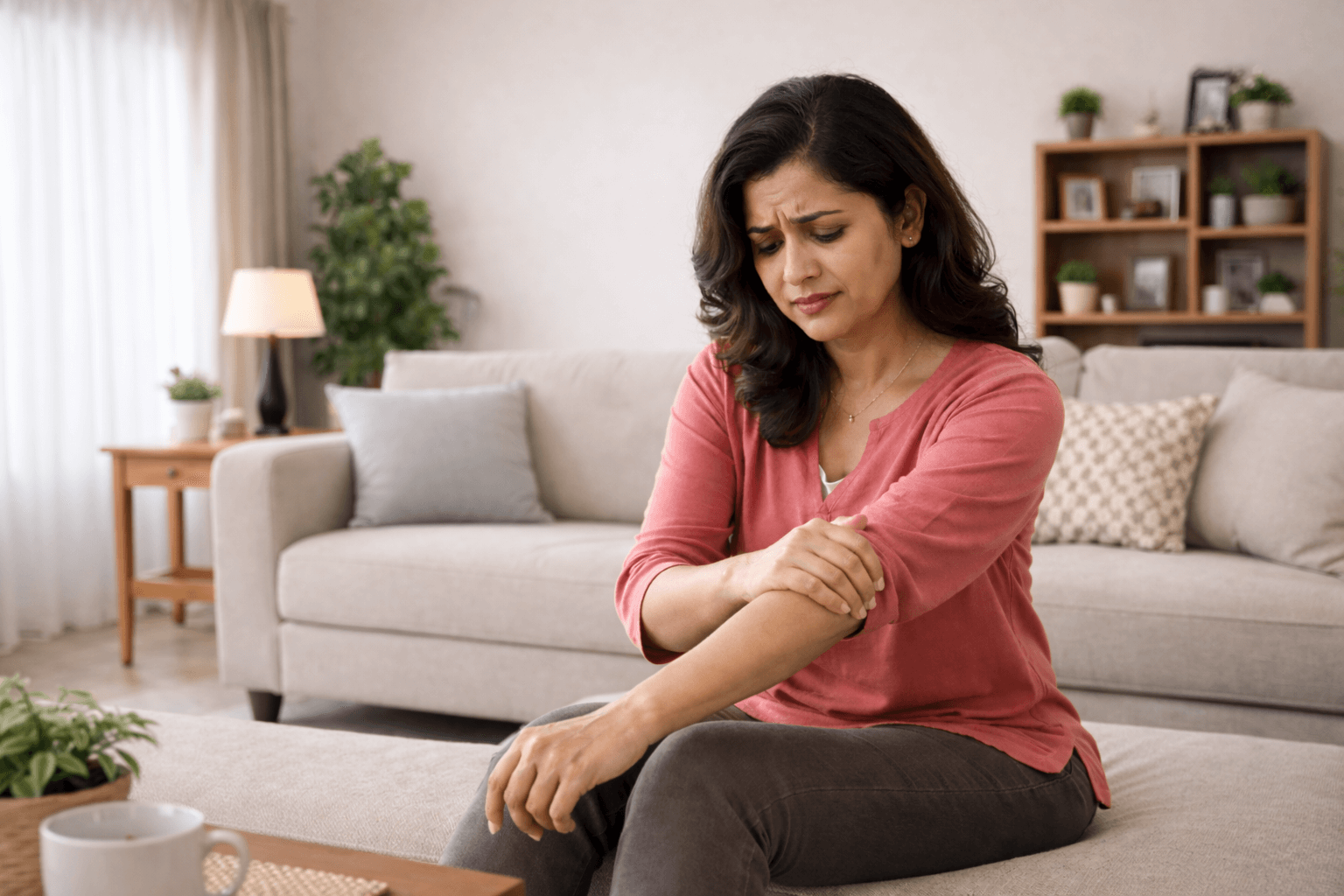
Bone loss doesn’t happen overnight. There’s no sudden alarm when your bones are becoming weaker or fragile. No visible sign, no dramatic symptom. And that’s exactly why so many of us ignore it until it starts affecting daily life.
Whether it’s joint pain that sneaks up in your 40s, fractures from a simple fall, or just a constant sense of fatigue, these could be body’s silent signals: your bones, joints and muscles might be slowly losing strength.
Let see some of the most common reasons:
“I get enough calcium from food”: a comfortable misconception.
You might eat your vegetables, drink milk or have dairy products now and then. That’s enough calcium, right? Not really.
According to the Indian Council of Medical Research (ICMR), adults need 1000mg of calcium per day1. But the average Indian diet only supplies 400–700 mg2. That’s a daily deficit of nearly 50%. This gap doesn’t show immediately: but over the years, it adds up, gradually affecting bone strength and resilience.
No symptoms? No action
Most vital reason for adults to not pay enough attention to bone health is because they wait for visible signs. But calcium deficiency doesn’t work like that. There’s no warning bell3. Just:
- Posture alterations or back pain that mostly imply “ageing”
- Cramps that refer to "normal fatigue"
- Brittle nails or weak grip that go unnoticed
What many don’t realize is that calcium deficit and bone loss often begin silently as osteopenia, a condition where bone mineral density is lower than normal but not low enough to be classified as osteoporosis. Osteopenia itself might not cause obvious symptoms, but it weakens the bone structure and can increase the risk of fractures even from minor injuries. If left unaddressed, osteopenia can progress into osteoporosis, a severe condition marked by fragile bones and high fracture risk4.
By the time symptoms like osteoporosis are detected, your body bones have already lost a lot.
Busy lifestyles might leave little room for balanced nutrition and physical exercise
Even when you eat well, your daily routine might not help your bones. Most urban lifestyles include5,6:
- Skipped meals or crash diets
- Limited exposure to sunlight (reducing Vitamin D3)
- Dairy-free choices due to preferences or intolerance
- Sedentary lifestyle
“Calcium is mostly for the older women”: absolutely a myth
Let’s bust a myth: calcium isn’t just for women after menopause. In reality4:
- Bone density peaks by 30: after that, we lose more than we build
- Men also face bone thinning, especially with poor diets or habits like smoking
- Women start losing calcium rapidly after pregnancy or around perimenopause
How to start and stick with it?
If you’re unsure whether you may need Calcium supplementation, here’s a checklist:
- Do you regularly consume dairy or calcium-rich plant foods?
- Do you spend time in sunlight daily?
- Are you over 30 or entering menopause?
- Do you have joint aches, back aches, low energy, or weak nails?
It’s not about age, it’s about timing.
A balanced diet of nutritious foods can help you maintain an appropriate weight and preserve healthy bones. Calcium and vitamin D3 are particularly important for bone health along with active lifestyle. Your calcium and vitamin D3 differ might vary based on your age, health and if already has documented bone loss. It’s always best to consult your health care provider to understand what is right for you and to determine whether supplementation is needed.
References:
1. ICMR-NIN Expert Group on Nutrient Requirement for Indians, Recommended Dietary Allowances (RDA) and Estimated Average Requirements (EAR) - 2020
2. Harinarayan CV, Akhila H, Shanthisree E. Modern India and Dietary Calcium Deficiency-Half a Century Nutrition Data-Retrospect-Introspect and the Road Ahead. Front Endocrinol (Lausanne). 2021 Apr 6;12:583654. doi: 10.3389/fendo.2021.583654. PMID: 33889131; PMCID: PMC8056136.
3. Patil V. Twin Deficiency of Calcium and Vitamin D Causes Chronic Pain Syndrome. J Indian Med Assoc. 2025;123(3):64-8.
4. Varacallo MA, Seaman TJ, Jandu JS, et al. Osteopenia. [Updated 2023 Aug 4]. In: StatPearls [Internet]. Treasure Island (FL): StatPearls Publishing; 2025 Jan-. Available from: https://www.ncbi.nlm.nih.gov/books/NBK499878/
5. Kopiczko A, Czapla M, Juárez-Vela R, Ross C, Uchmanowicz B. Dairy product consumption, eating habits, sedentary behaviour and physical activity association with bone mineral density among adolescent boys: a cross-sectional observational study. BMC Pediatr. 2024 Jan 17;24(1):53. doi: 10.1186/s12887-024-04539-y. PMID: 38233826; PMCID: PMC10792931
6. Liu X, Wu Y, Bennett S, Zou J, Xu J, Zhang L. The Effects of Different Dietary Patterns on Bone Health. Nutrients. 2024 Jul 17;16(14):2289. doi: 10.3390/nu16142289. PMID: 39064732; PMCID: PMC11280484.